Bernard Toale Gallery 1999-2008
Examples of Exhibits
2005
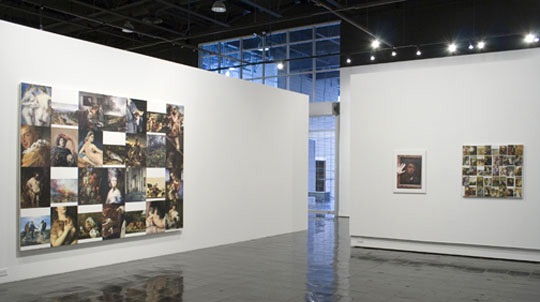
Bureau for Open Culture
Bureau for Open Culture540 × 360Search by image
David Ording , After, 2005–07 oil on canvas, 7 x 10 feet courtesy of the artist and Bernard Toale Gallery, Boston --
2007
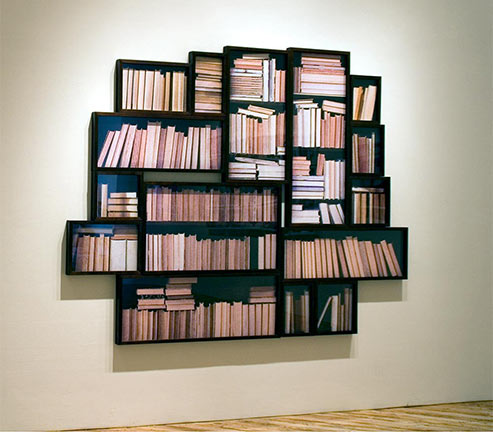
Installation at Bernard Toale Gallery, Boston, 2007.
All the Embarrassing Books (from Home-Decor Magazines) is part of the permanent collection at The McNay Art Museum, San Antonio, TX
All the Embarrassing Books (from Home-Decor Magazines), 2007
All the Embarrassing Books (from Home-Decor Magazines) are re-photographed details of bookcases in home-improvement and décor websites and magazines that have their books turned spine in. Only someone who is deeply embarrassed by the content of his or her books would turn them around this way – or, perhaps, these books have turned themselves this way because they are embarrassed by their owners. In the never-ending variety of perfectly appointed, vapidly flawless rooms in these virtual spaces, this refusal of content actually makes sense. Subservient to the decorative, these books have become nutrition-less, emptied of purpose and content, and erased of meaning - a sedated empty exchange which produces a valueless object from the apparition of an object of value.
Related:
Just loved this show. Serendipitously met a friend there who was considering opening an online store that would sell round dog beds exclusively. "Why round dog beds?" I asked. I should have known not to ask. It was obvious. Her dogs prefer round dog beds. I thought it was a swell idea and really encouraged her to follow through with her dream. Well it was more than 10 years before she was able to pull all the pieces together. And yes indeed, all the dog beds are round and rather up scale. Apparently, the fabric that is used are all high quality upholstery fabric. I am seriously considering buying one of her round dog beds for my pooch. The site, Goodnight Dog, (such a clever name) has a lovely toile design that is perfect for my living room. I'd like to think that it was an exhibition at the former Bernard Toale Gallery and my encouragement that led to her online dog bed site. I do hope it will be successful.
++
2008
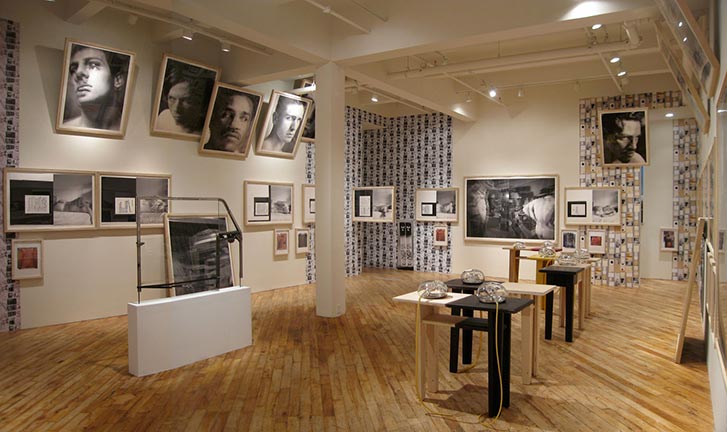
Stephen Barker - The Archivist's Wig
The Archivist's Wig1368 × 813Search by image
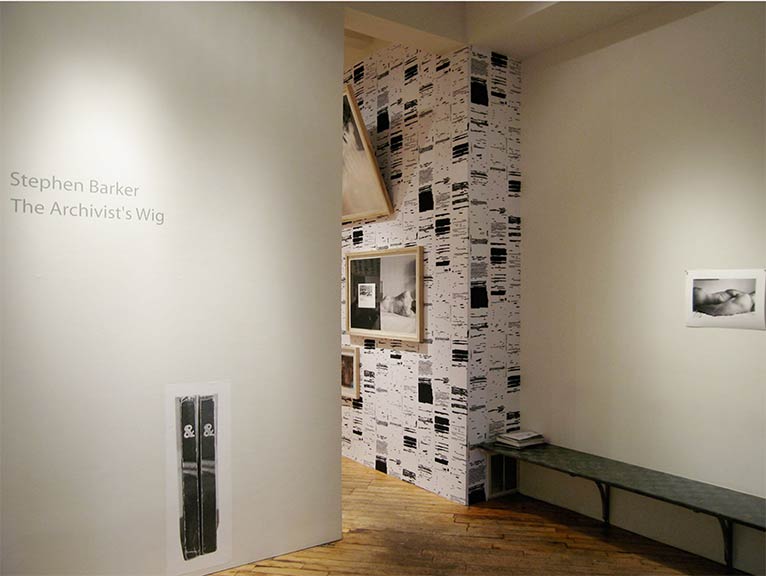
The Archivist's Wig, 2000-2007, Bernard Toale Gallery installation view, Boston, Feb 21 – Mar 29, 2008
LAURA MCPHEE AND TONI PEPE AT BERNARD TOALE GALLERY
April 16th, 2008 · No Comments · Artists, Boston
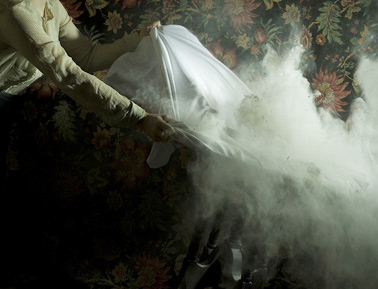
2008-Toni-Pepe.jpg
Toni Pepe, Untitled from the series Angle of Repose (Tablecloth with Dust), 2007, Archival Inkjet print [courtesy of the gallery]
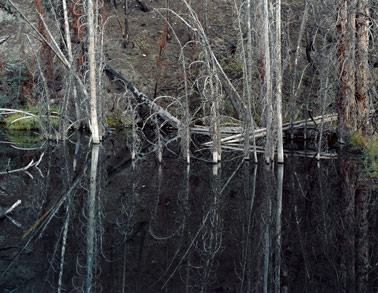
2008-Laura-McPhee.jpg
Laura McPhee, Beaver Ponds on Fisher Creek After Wild Fire, White Cloud Mountains, Idaho, 2007, C-print [courtesy of the gallery]
Bernard Toale Gallery’s current exhibition pairs the work of two artists, Toni Pepe and Laura McPhee, with strikingly different approaches to photography.
McPhee’s dramatic mountains and forests are hauntingly still landscapes captured with the precise eye of a photographer’s photographer. Pepe’s Angle of Repose series is an idea-based collection of staged photos of women in various household environments, creating a dark and moody narrative along the lines of Cindy Sherman’s art historical pieces.
You’ll want to bring a McPhee home with you, but you’ll still be thinking about Pepe the next day.
Laura McPhee, Two Years Later
Toni Pepe, Angle of Repose
Bernard Toale Gallery
450 Harrison Ave, Boston 02118
April 2 through May 10, 2008
This was the Bernard Toale Gallery's website from 1999-2008. It was named as the best art gallery in Best of Boston for a number of years including 1999 and 2006.
Bernard Toale Gallery
450 Harrison Ave.
Boston MA
(617) 482-2477
Best of Boston 1999
In the 1999 edition of the Best of Boston was an article about the gallery:
The Bernard Toale Gallery moved last year from its swank Newbury Street location to a more intimate South End setting. Toale’s edginess is more than topographical however: He represents many of the city’s most promising younger artists, such as Ambreen Butt, David Hilliard, and Lucy White. His is also the gallery of choice for many shows of national significance, such as last year’s posthumous exhibit of photographer Francesca Woodman. Between exhibitions, Toale sponsors readings, video installations, and the occasional fashion show. And once again this year, he’ll use his gallery’s clout for a good cause—as chairperson for ARTcetera 2000, the biennial fine arts auction that benefits the AIDS Action Committee.
AND THEN in November of 2008 there was this article in which the Bernard Toale Gallery was mentioned.
The great Boston Art Shakeout
Ten local galleries closed this year. Where are we going?
By GREG COOK
November 14, 2008
By September, the Harrison Avenue gallery district seemed to have become a zombie, stiffly stumbling forward, as the citywide exhibit-space upheaval that began this past spring caught up with the neighborhood. Ten galleries were shuttered across Boston in 2008, seven of them in the South End, driven mostly by expiring leases and gloomy economic forecasts. The number of local venues deeply engaged in the future of contemporary art — particularly locally-made contemporary art — shrank. This fall, with each day auguring further economic catastrophe, the future looked even worse.
But this past week, Harrison Avenue came back to life, abuzz with hundreds of people out for the First Friday gallery receptions. All told, eight galleries have opened or changed addresses in the district since February. On Friday four of those galleries participated in the monthly showcase for the first time since settling in. Two more spaces are slated to open there next month.
Over the past decade, the South End has increasingly challenged Newbury Street as the heart of the city's art scene. This year's changes shifted the center of gravity to Harrison Avenue. "Before we were a destination because of the uniqueness of First Fridays," says Arlette Kayafas of GALLERY KAYAFAS. "Now I think we will be a destination because of that, but also the quality of the work."
Friday's visitors and dealers were energized, hopeful, and happily surprised. The rearrangements landed substantial players in more prominent storefronts, making the neighborhood feel as if — maybe — it was in better shape than it was a year ago.
The upheaval has made the South End feel excitingly new, but has diminished Newbury Street. Economic nervousness abounds. And some worry that this new world order may mean more shows of less adventurous work.
A wash
This year's gallery shakeup has been nothing short of seismic. Over the course of 2008, the gallery building at 450 Harrison Avenue — where multi-year leases were up and rents were increasing — lost ALLSTON SKIRT GALLERY, BERNARD TOALE GALLERY (whose namesake, Bernard Toale, switched his focus from exhibiting to consulting), Michael Price's MPG CONTEMPORARY, GALLERY XIV (which last fall had taken over the 450 space previously occupied by Locco Ritoro), and JULIE CHAE GALLERY (which opened in 2007 in space vacated by Genovese/Sullivan when it moved to Andover; Chae now plans to move to New York)...
FYI: Joseph Carroll ran the Bernard Toale Gallery for five years before taking it over in the summer of 2008 and reopening the space as Carroll and Sons that September.​
The content below is from the site's archived pages from 1999-2008 and other outside sources.​
The Bernard Toale Gallery was established by Bernard Toale in 1992 at 11 Newbury Street in Boston. Over the years, the Gallery has shown cutting-edge contemporary art in all media by internationally-known as well as emerging artists. In the spring of 1998, the Gallery moved to 450 Harrison Avenue in Boston's South End.
Hours
Tuesday - Saturday
10:30am - 5:30pm
Closed Saturdays in July
Open in August by
appointment only
Contact
tel 617-482-2477
fax 617-482-2549
Staff
Bernard Toale
DIRECTIONS
FROM THE WEST
Take the Mass Pike to 93 South. Get off at Exit 24A. Turn left at stoplight. Go 2 short blocks and turn left at entrance to Mass Pike/Albany St. Stay left and follow Albany St. Ramp. Go three short blocks to E. Berkeley St. Take a right on E. Berkeley then your first left onto Harrison Ave. It's only two short blocks to Thayer St. We are on the left at the corner of Harrison and Thayer.
FROM THE WEST NORTH
Off of 93 South, take the Mass Pike - Albany St. exit. This exit splits almost immediately and you should follow the Albany St. exit. From there, proceed to E. Berkeley and follow above instructions.
FROM THE SOUTH
Off of 93 North , take Exit 18/Mass Ave. At light turn right onto Mass Ave. Go 2 blocks and turn right on to Harrison Ave. And travel 8 blocks to Harrison and Thayer.
Parking is available in the lot next to the gallery at 475 Harrison Ave.
PUBLIC TRANSPORTATION
SUBWAY
Orange Line: New England Medical Center, about a half a mile away.
Red Line: Broadway, across the channel, about a half a mile away.
Green Line: Copley Square (get bus Number 9) or Arlington (slightly over 1/2 mile)
BUS LINES
From Green Line (Copley Station:)
Number 9 City Point/Copley Square. Via Arlington St. Get out at Albany and East Berkeley.
Number 10 City Point/Copley Square. Via Dedham St. Get out at Albany and East Berkeley.
From the Orange Line (NE Medical Ctr):
Number 3 Chinatown/Marine Ind - to Herald and Harrison Streets
Number 11 City Pt./Downtown - to Albany and E. Berkeley
Number 49 Dudley/Downtown - to Dartmouth and Washington St
Get T schedules and maps at http://www.mbta.com/sched

More Background On BernardToaleGallery.com
BernardToaleGallery.com represents the digital legacy of one of Boston’s most respected contemporary art spaces: the Bernard Toale Gallery. Although the original physical gallery operated between the early 1990s and 2008, its website and archival materials continue to circulate among scholars, artists, collectors, and enthusiasts who seek to understand its role in shaping Boston’s contemporary art identity. The website preserves a robust record of exhibitions, curatorial direction, gallery philosophy, artist rosters, and the gallery’s significant influence on the South End arts community.
This article provides a full, immersive overview of BernardToaleGallery.com—its origins, leadership, reputation, programming, cultural significance, notable exhibitions, artistic contributions, and the circumstances surrounding its transformation in 2008. The goal is to offer readers a detailed, historically grounded portrait that honors both the gallery and its continuing digital presence.
Founding and Ownership
The Bernard Toale Gallery was founded by art dealer, curator, and arts advocate Bernard “Bernie” Toale. Established in 1992, the gallery originally opened on Newbury Street, one of Boston’s most prestigious cultural boulevards. From the start, it was conceived as a progressive, risk-embracing venue for contemporary art—a place where both established and emerging artists could present challenging, experimental, or refined work in any medium.
Toale himself was deeply involved in all aspects of gallery operations: artist selection, exhibition planning, space management, community programming, and partnerships with institutions. His vision emphasized the nurturing of younger artists and those working in conceptually engaging or less commercial areas of fine art, including photography, installation, mixed media, and experimental forms.
Later, during the mid-2000s, longtime gallery associate Joseph Carroll gradually assumed a more prominent leadership role. In 2008, he ultimately took over the gallery space and reopened it under a new name, Carroll and Sons, continuing the tradition of contemporary art programming. This transition marked the end of the Bernard Toale Gallery as a physical gallery, but the legacy persists through the archive preserved on BernardToaleGallery.com.
Location and Physical Space
The gallery’s physical evolution mirrors the shifting geography of Boston’s art scene.
Newbury Street (1992–1998)
The original space positioned the gallery among some of Boston’s most well-known art and design institutions. It was a high-visibility location, surrounded by fashion boutiques, publishing houses, cultural institutions, and other galleries. Exhibitions here helped establish the gallery’s reputation as a premier destination for forward-thinking contemporary art.
South End / Harrison Avenue (1998–2008)
In 1998, the gallery moved to 450 Harrison Avenue, placing it at the forefront of what would soon become the heart of the South End arts district. This location ultimately became one of the city’s most important creative corridors. With open warehouse-style spaces and a community of neighboring galleries, Harrison Avenue offered flexibility for ambitious installations, large-format photography, conceptual works, and multimedia projects.
The gallery’s participation in major South End events—particularly the celebrated First Friday open studios—further cemented its identity as a cornerstone of Boston’s cultural life.
Reputation, Awards, and Recognition
Bernard Toale Gallery gained substantial recognition during its operation. Among its most notable accolades:
Best of Boston – Art Gallery (1999 & 2006)
The gallery was repeatedly named Best Art Gallery in Boston. These awards highlighted its daring aesthetic choices, its support for young and emerging talent, and its commitment to presenting exhibitions of national significance.
The 1999 award described the gallery as having an “edgy” approach and praised Toale for championing artists who were reshaping Boston’s artistic identity. The gallery was also acknowledged for hosting readings, video installations, fashion shows, and fundraisers—including involvement in major events benefiting the AIDS Action Committee.
Role in Boston’s Contemporary Art Shift
Throughout the 2000s, the South End increasingly challenged Newbury Street as Boston’s cultural center. Bernard Toale Gallery played a significant role in this shift: its willingness to present challenging, contemporary work contributed to the neighborhood’s reputation as the city’s leading arts destination. Even as the 2008 economic recession forced many galleries to close, Bernard Toale Gallery remained a symbol of high-quality, risk-tolerant programming.
Artistic Mission and Goals
From the beginning, the gallery’s goals were clear:
-
Showcase contemporary art across media rather than restrict exhibitions to a single discipline.
-
Support emerging and mid-career artists, giving them professional opportunities for exposure.
-
Promote experimental and conceptual work, including large-scale installations, photography, video, and mixed media.
-
Create a dialogue between art and community through readings, performances, and social events.
-
Maintain a strong critical presence, ensuring that exhibitions were intellectually rigorous and aesthetically compelling.
The gallery earned the respect of both local and national critics because its programming struck a balance between accessibility and innovation. It was known among artists for treating each exhibition as an individual curatorial project rather than merely filling the calendar.
Audience and Community Engagement
Bernard Toale Gallery drew a diverse audience:
-
Collectors seeking emerging talent and new contemporary trends
-
Museum professionals scouting innovative artists for larger institutional exhibitions
-
Students and academics from Boston’s strong university network
-
Local community members engaged in the South End arts culture
-
Artists who viewed the gallery as a supportive and energetic space for dialogue
The gallery frequently participated in community-wide events and collaborated with local cultural institutions. Its role in ARTcetera, a major fine arts auction benefiting the AIDS Action Committee, further reinforced its social engagement and philanthropic identity.
Notable Artists and Exhibitions
BernardToaleGallery.com preserves examples of some of the gallery’s most memorable exhibitions between 1999 and 2008. These include:
David Ording (2005–2007)
Ording’s large-scale oil paintings—such as his seven-by-ten-foot piece titled “After”—demonstrated the gallery’s commitment to ambitious, physically imposing works. His paintings embraced subtly surreal or dreamlike atmospheres, balancing traditional techniques with contemporary sensibilities.
All the Embarrassing Books (2007)
A conceptual photographic installation depicting bookcases with the spines of books turned inward, this work offered commentary on aesthetics, self-consciousness, and the erasure of intellectual content within consumer-focused interior design. Pieces from this exhibition eventually became part of the McNay Art Museum’s permanent collection, demonstrating the enduring impact of gallery programming.
Stephen Barker – “The Archivist’s Wig” (2008)
A memorable show installed in early 2008, this mixed media project explored themes of documentation, memory, and physical archives. Through immersive visual storytelling, the exhibition posed questions about identity, time, and the material representation of history.
Toni Pepe & Laura McPhee (2008)
The pairing of these two photographers highlighted the gallery’s ability to juxtapose artists with differing styles yet complementary conceptual underpinnings.
-
Laura McPhee offered dramatic, contemplative landscapes—particularly scenes documenting natural destruction and regrowth in places like the White Cloud Mountains of Idaho.
-
Toni Pepe contributed a more intimate, idea-driven series focused on staged domestic spaces, emotional tension, and the complexity of interior life.
Critics noted that while McPhee’s images were breathtakingly seductive, Pepe’s lingered in the imagination long after viewing—a testament to the gallery’s skill in curatorial pairing.
Other Represented Artists
Over the years, the gallery represented or exhibited many notable artists, including:
-
Ambreen Butt
-
David Hilliard
-
Lucy White
-
Francesca Woodman (posthumous exhibitions)
-
A wide range of national and international contemporary artists
This mix of emerging and established talent broadened the gallery’s appeal and influence.
History & Transition (1992–2008)
Early Growth (1992–1998)
From its opening on Newbury Street, the gallery quickly gained a reputation for bold curatorial choices. It became a platform for younger Boston artists while also attracting attention from national art professionals.
South End Flourishing (1998–2007)
The move to Harrison Avenue allowed the gallery to expand its programming. Larger rooms and flexible layouts created ideal conditions for installation art and photographic exhibitions. Participation in the thriving South End arts district amplified its influence.
2008 Art Shakeout
The recession of 2008 hit Boston’s galleries hard. Multiple spaces closed across the city, including many in the South End. Rising rents, expiring leases, and economic uncertainty forced dramatic changes. Bernard Toale Gallery closed in 2008—not due to lack of prestige or creative momentum, but due to the same financial pressures affecting galleries nationwide.
Transition to Carroll and Sons
After closing, Joseph Carroll—who had run the gallery for five years—reopened the space under a new name, continuing the legacy of contemporary programming while marking a new chapter.
Website Significance (BernardToaleGallery.com)
BernardToaleGallery.com functions today as a digital archive of the gallery’s active years. Although not a contemporary gallery website in the traditional sense, its curated content remains invaluable:
-
Exhibition documentation
-
Artist information
-
Photographs of installations
-
Press excerpts
-
Historical notes
-
Location details
-
Community reflections
For art historians, students, or collectors researching Boston’s art history, the website is a rare resource. It preserves more than a decade of creative output and cultural engagement, including exhibitions that might otherwise be lost to time.
Cultural & Social Significance
Bernard Toale Gallery is remembered as one of the core institutions that helped define Boston’s contemporary visual arts identity in the 1990s and 2000s. Its influence includes:
-
Elevating emerging Boston artists who later achieved national prominence
-
Encouraging a critical photography culture within the city
-
Supporting conceptual art practices in a region more traditionally associated with fine painting and institutional art
-
Cultivating the South End arts district into the vibrant community it is today
-
Promoting arts-related philanthropy through events such as ARTcetera
-
Hosting interdisciplinary programming that expanded public engagement with contemporary art
By prioritizing experimentation, diversity of media, and cultural conversation, the gallery helped broaden Boston’s artistic horizons.
BernardToaleGallery.com remains an important online archive for anyone seeking to understand the evolution of contemporary art in Boston during a defining era. Through its thoughtful curation, innovative exhibitions, and strong community presence, the gallery made significant contributions to both local culture and the wider art world. Even though the physical space closed in 2008, its influence endures through the artists it launched, the exhibitions it hosted, and the ongoing relevance of its digital archive.